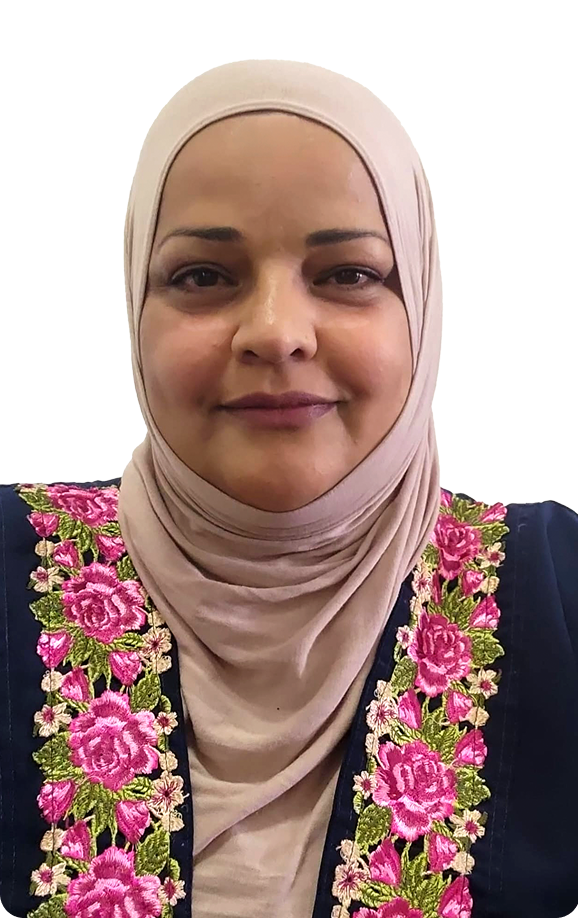
Meet Laila Alsheikh
Laila Alsheikh is a bereaved Palestinian mother from Bethlehem who chose not to let the death of her infant son Qussay become another reason for her children to hate.
In the dehumanizing of the other, you begin to dehumanize yourself
Chen Alon’s peace work began with a moment he could no longer explain away.
He had served for years in the Israeli army — first as a combat soldier and officer, then as an operations officer in the reserves. Like many Israelis of his generation, Chen was raised with the belief that military service was a way to protect his family, his people, and the State of Israel. But during the First and Second Intifadas, while serving in the West Bank and Gaza, the story he had inherited began to fracture.
He saw refugee camps, curfews, checkpoints, closures, house demolitions, and Palestinian villages turned into places of confinement. At first, he tried to hold on to the explanation he had been given: that these actions were necessary for security. But the questions kept growing.
Then came the moment that changed him. While enforcing military closure, Chen saw Palestinian children who reminded him of his own daughter. At the same time, he was confronted with sick Palestinian children trying to reach medical care. Suddenly, the distance between “our children” and “their children” collapsed. He could no longer live with the contradiction of being a loving, protective father at home while participating in a system that dehumanized Palestinian families under occupation.
That realization led Chen to refuse further service in the Occupied Territories. In 2002, he joined other reserve officers and combat soldiers in signing the Combatants Letter, a public act of refusal that challenged Israeli society from within. For taking that stand, Chen served time in military detention. His refusal was not an exit from responsibility; it was his way of taking responsibility.
In 2005, Chen became one of the co-founders of Combatants for Peace, a joint Palestinian-Israeli movement of former fighters who chose to lay down their weapons and struggle together through nonviolent action. The movement created a rare space where people who had once seen each other as enemies could speak honestly, act jointly, and resist the occupation without reproducing its violence.
Chen also brought his life as a theatre artist into his activism. Drawing on Theatre of the Oppressed, he helped create a Combatants for Peace theatre group in which Israelis and Palestinians use performance to confront checkpoints, house demolitions, fear, trauma, and dehumanization. In Chen’s hands, theatre becomes more than art. It becomes a rehearsal for moral courage: a way to step into another person’s reality, feel the weight of power, and imagine different choices.
For B8 of Hope, Chen’s story reflects the hard and necessary work of turning recognition into action. He shows that peacebuilding is not only dialogue after the fact. It can also be refusal, accountability, creativity, and the decision to see the human being on the other side before it is too late.