
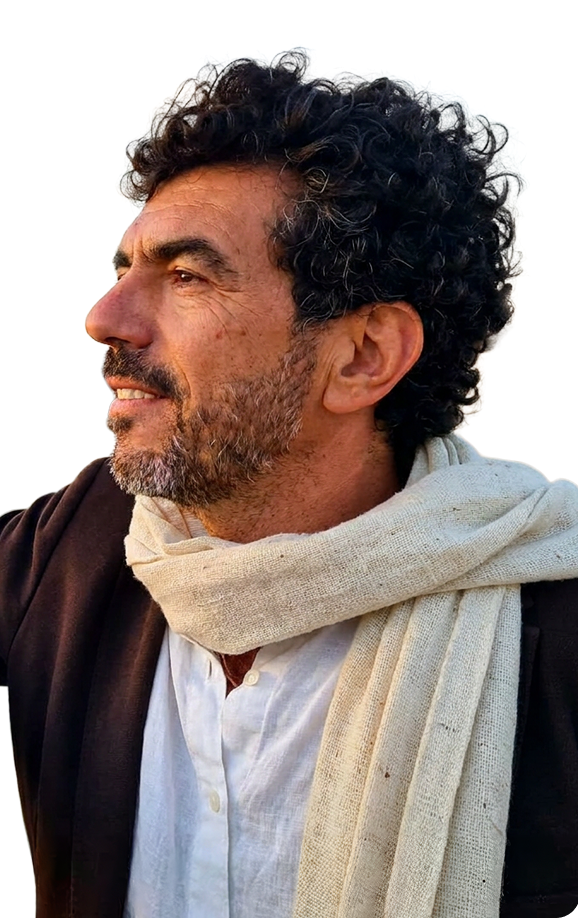
Meet Sulaiman Khatib
Sulaiman “Souli” Khatib is a Palestinian former prisoner and co-founder of Combatants for Peace whose life’s work turns pain, imprisonment, and resistance into a vision of nonviolence and collective liberation.
If you must divide us, let it be as those who believe in peace and equality and those who don’t … yet.
Maoz Inon and Aziz Abu Sarah carry losses that could easily have placed them on opposite sides of an unbridgeable divide.
Aziz grew up Palestinian in and around East Jerusalem during the First Intifada. He was still a child when his older brother Tayseer was arrested by Israeli soldiers and later died following abuse in Israeli custody. Tayseer had been more than a brother to him; he had been a source of guidance and protection. His death filled Aziz with anger, and for years, revenge seemed like the only honest response to what his family had suffered.
Maoz grew up in southern Israel and became a social entrepreneur, creating tourism initiatives designed to bring people into contact with communities, histories, and landscapes they might otherwise never encounter. On October 7, 2023, his parents, Bilha and Yakovi, were killed in their home in Netiv HaAsara during the Hamas-led attack.
The expected story was already written for them: Palestinian pain against Israeli pain, one grief used to cancel out the other, each loss becoming further proof that coexistence was impossible.
Maoz and Aziz chose another story.
They met each other not by setting aside their identities, but by bringing their full histories into the relationship. Aziz did not stop being Palestinian or abandon the demand for freedom, dignity, and equality. Maoz did not stop mourning his parents or naming the horror of October 7. What changed was their understanding of what those truths required of them. They came to believe that their losses could become reasons to prevent further suffering rather than permission to inflict it.
Their partnership entered the international spotlight in April 2024, when they opened the TED conference together. A Palestinian whose brother died following abuse in Israeli custody and an Israeli whose parents had recently been killed by Hamas stood on the same stage and called not for revenge, but for reconciliation, security, equality, and a shared political future.
Today, Maoz and Aziz serve as co-executive directors of InterAct International and are working to build a broad coalition of Palestinians and Israelis prepared not only to support peace, but to organize for it. Their book, The Future Is Peace: A Shared Journey Across the Holy Land, carries readers through their personal and national histories, the places that shaped them, and the friendship they have built amid war.
They have also brought this shared vision into the growing civic movement for peace through the It’s Time Coalition Peace Summit — a major gathering of Israelis and Palestinians working to place peace, equality, security, and political resolution back at the center of public life. B8 of Hope helped sponsor the summit, supporting a coalition that refuses to leave the future only in the hands of those invested in fear, separation, and endless war.
Maoz and Aziz’s partnership does not suggest that Palestinian and Israeli histories or present realities are identical. Nor does it ask either people to surrender memory, justice, or belonging. Instead, they offer a different dividing line: not between Palestinians and Israelis, but between those ready to build peace and equality — and those who are not ready yet.
For B8 of Hope, their friendship embodies a central conviction: hope is not denial of reality. It is the decision to act together so that reality can change.