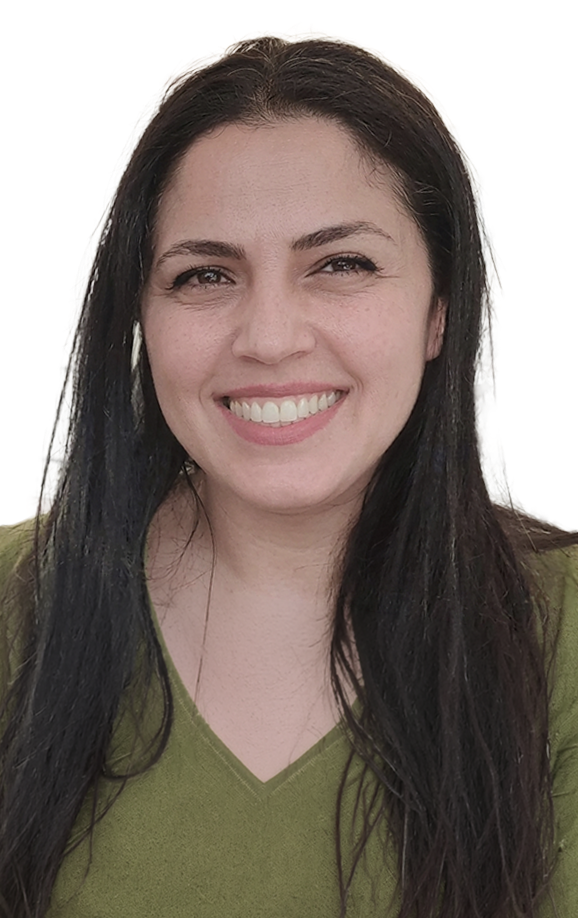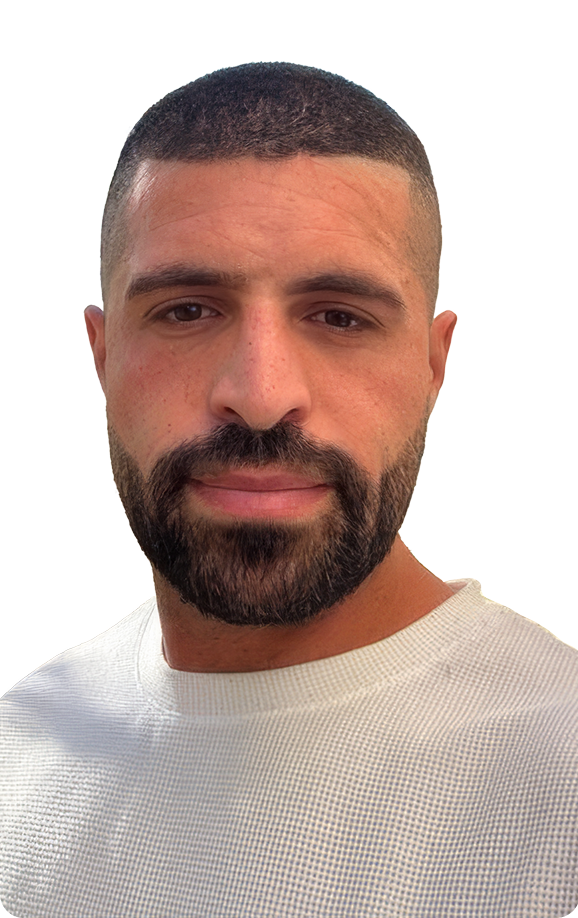

Meet Sally Abed
Sally Abed is a Palestinian citizen of Israel organizing Jewish and Palestinian communities to turn fear, inequality, and separation into shared civic power.
Holding conflicting narratives is the hardest part of our work, and also the most important.
Meredith Rothbart describes herself as Jewish, religious, Zionist, an activist, and a peacemaker. These identities are not separate parts of her life. Her work has grown from the challenge of carrying them together.
Meredith grew up in what she calls an “American Jewish bubble” in Allentown, Pennsylvania. At ten, she promised herself that she would one day make aliyah. She moved to Jerusalem in 2008, studied at Nishmat, a religious Zionist women’s seminary, and later served in the IDF’s Civil Administration in the West Bank.
Between seminary and military service, she volunteered at a Kids4Peace summer camp. Meredith arrived as a committed young Jewish leader, but quickly realized that she knew almost nothing about Palestinian life and had never met a Palestinian.
A colleague named Saed began answering her questions. He showed her his identification card and explained what it meant to be a Palestinian Jerusalemite without Israeli or Palestinian citizenship. Rather than dismissing her ignorance, he made room for her to learn. Meredith has said that this unplanned summer experience changed the direction of her life.
She later became the Israeli co-director of Kids4Peace Jerusalem, working with Jewish, Christian, and Muslim families from across the city. The experience also forced her to explain why she continued to identify as a Zionist while working for peace and Palestinian rights. Her response was not to abandon one identity for another. She understood her attachment to Jerusalem and Jewish national life as a responsibility to help create a reality in which Palestinians could also live with freedom, dignity, and security.
After more than a decade in Israeli-Palestinian civil society, Meredith began to focus on the organizations carrying this work. Peacebuilding leaders were often expected to respond to enormous political and human challenges while operating with limited funding, overstretched teams, and little strategic support.
In 2019, she co-founded Amal-Tikva with Basheer Abu Baker. Its purpose is not to become the public face of peacebuilding, but to strengthen the people already doing it. Amal-Tikva helps organizations clarify their strategies, develop leadership, measure their work, care for their staff, secure resources, and cooperate across a field that has often been fragmented.
Meredith is direct about what this work is—and what it is not. Peacebuilding, in her words, is not a hashtag or simply a group of people sitting in a dialogue circle. It requires concrete action that reduces violence, improves people’s lives, and builds better systems for interaction.
Since October 7, she has written as a Jewish Israeli mother whose husband served hundreds of days in the reserves and whose children have been awakened by sirens. At the same time, she leads a mixed Israeli-Palestinian team and listens to Palestinian colleagues speak about displacement, restricted movement, fear, and the suffering in Gaza. She acknowledges that empathy has not always come easily during the war. The work, for her, is to remain present, listen honestly, and ensure that conflicting realities can be voiced without forcing one to erase the other.
Amal-Tikva is B8 of Hope’s consulting partner on the ground and helps manage its grantmaking and organizational support. Meredith also serves on B8 of Hope’s Advisory Board. Much of her contribution happens away from public view: helping organizations make decisions, solve internal problems, find resources, support their staff, and remain effective when the political environment makes their work hardest.