Women Wage Peace and Itach-Maaki
Women Where Decisions Are Made
 Women Wage Peace
One of the things we have learned over the years is that organizations can often achieve more when they stop working in parallel and start working together. That is why B8 of Hope created our Synergy Grants in 2022: funding specifically designed for organizations combining different areas of expertise around a shared goal.
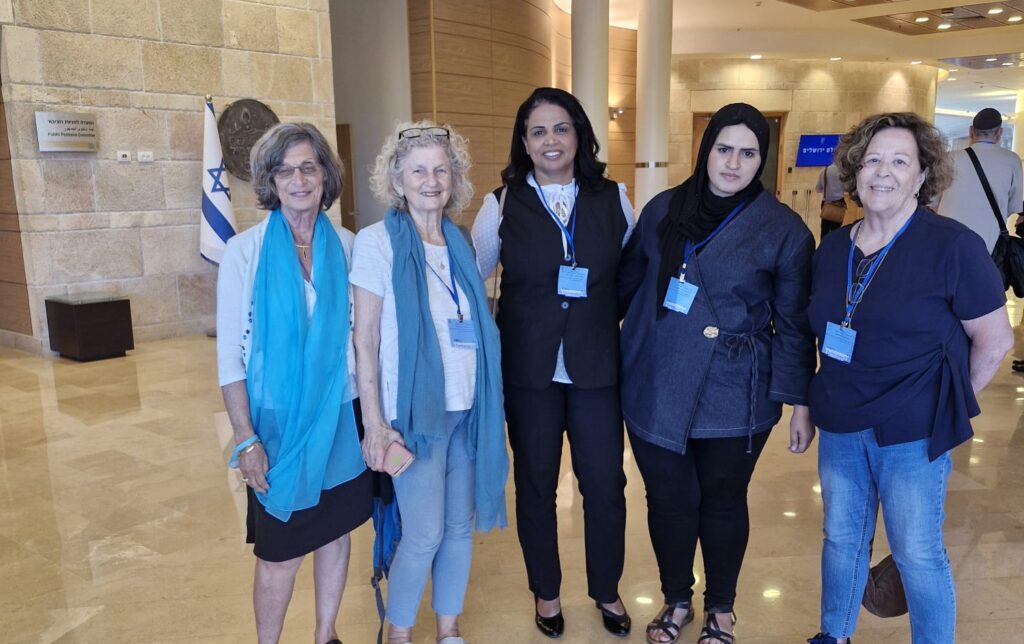
One of the Synergy projects we are supporting this year brings together our longtime grantee Women Wage Peace with Itach-Maaki: Women Lawyers for Social Justice. Women Wage Peace was born in the aftermath of the 2014 Gaza war and has since grown into Israel’s largest grassroots women’s peace movement. Itach-Maaki has spent more than two decades advancing women’s rights and representation, with particular expertise in law, policy and the implementation of UN Security Council Resolution 1325 on Women, Peace and Security.
A new Knesset will soon be elected in Israel...The people sitting around those tables will make decisions with enormous consequences... Women should not have to fight their way into those conversations after the decisions have already been made.
That resolution, adopted unanimously by the Security Council in 2000, marked an important shift in how women were understood in relation to war and conflict: not only as people profoundly affected by violence, but as people who must have a meaningful role in preventing conflict, negotiating peace and making decisions about security. Among other things, Resolution 1325 calls for women to be represented at all levels of decision-making in the prevention, management and resolution of conflict.
Israel was, in fact, the first country to incorporate parts of Resolution 1325 into national legislation, in 2005. Itach-Maaki was among the organizations pushing that process forward and has spent much of the past two decades working to turn the principle into actual practice: not simply more women in public life, but women from diverse communities having meaningful influence over the decisions that shape their lives.
Together with Women Wage Peace, they are now working to institutionalize the Women’s Cabinet, a coalition of women’s organizations created during the Gaza war in response to a reality that remains remarkably persistent: women are still too often absent from the rooms in which questions of war, security, diplomacy, and peace are decided.
With Israeli elections approaching this autumn, the timing is significant. This is not an electoral campaign, nor is it about telling anyone how to vote. Rather, the aim is to build an infrastructure that can remain in place regardless of which parties form the next government and ensure that women from different communities have the expertise, relationships, and access needed to influence political and security decision-making.
In the first five months alone, the Women’s Cabinet held around ten meetings with Members of Knesset and their advisers from across the political spectrum, participated in four Knesset committee meetings, convened its first parliamentary roundtable and produced five policy papers—more than originally planned—addressing subjects ranging from women’s political representation to violence in the West Bank, regional diplomacy and education for peace and democracy.
A new Knesset will soon be elected in Israel and a new government formed. The people sitting around those tables will make decisions with enormous consequences for everyone living in the region. Women should not have to fight their way into those conversations after the decisions have already been made.
There is an opportunity now to make sure they are there from the beginning. That is exactly the kind of moment our Synergy Grants were created for, and one we are so proud to support.