Partners:
Roots-Shorashim-Judur & Lissan
Dialogue depends not only on the willingness to speak, but also on the ability to hear and respond directly. In Israeli-Palestinian encounter spaces, translation can make conversation possible — but it can also limit spontaneity, emotional depth, and participants’ sense of agency.
What B8 of Hope supported
In 2025, B8 of Hope supported Café Shorashim, a joint initiative by Lissan and Roots that explored how Hebrew and Arabic language learning could strengthen binational dialogue work.
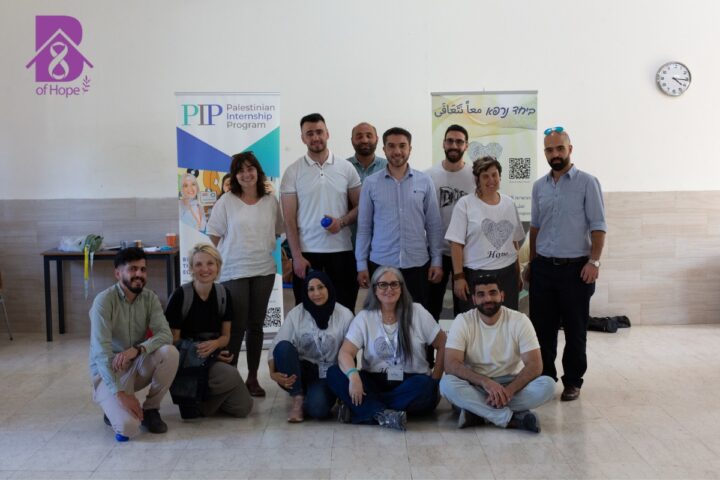
Café Shorashim combined structured language instruction with guided language exchange. Drawing on Lissan’s pedagogical expertise and Roots’ experience creating dialogue spaces, the program offered two Hebrew courses for 25 Palestinian participants, an Arabic course for 18 Israeli participants, and a 15-week in-person language exchange with 15 Palestinian and 10 Israeli participants.
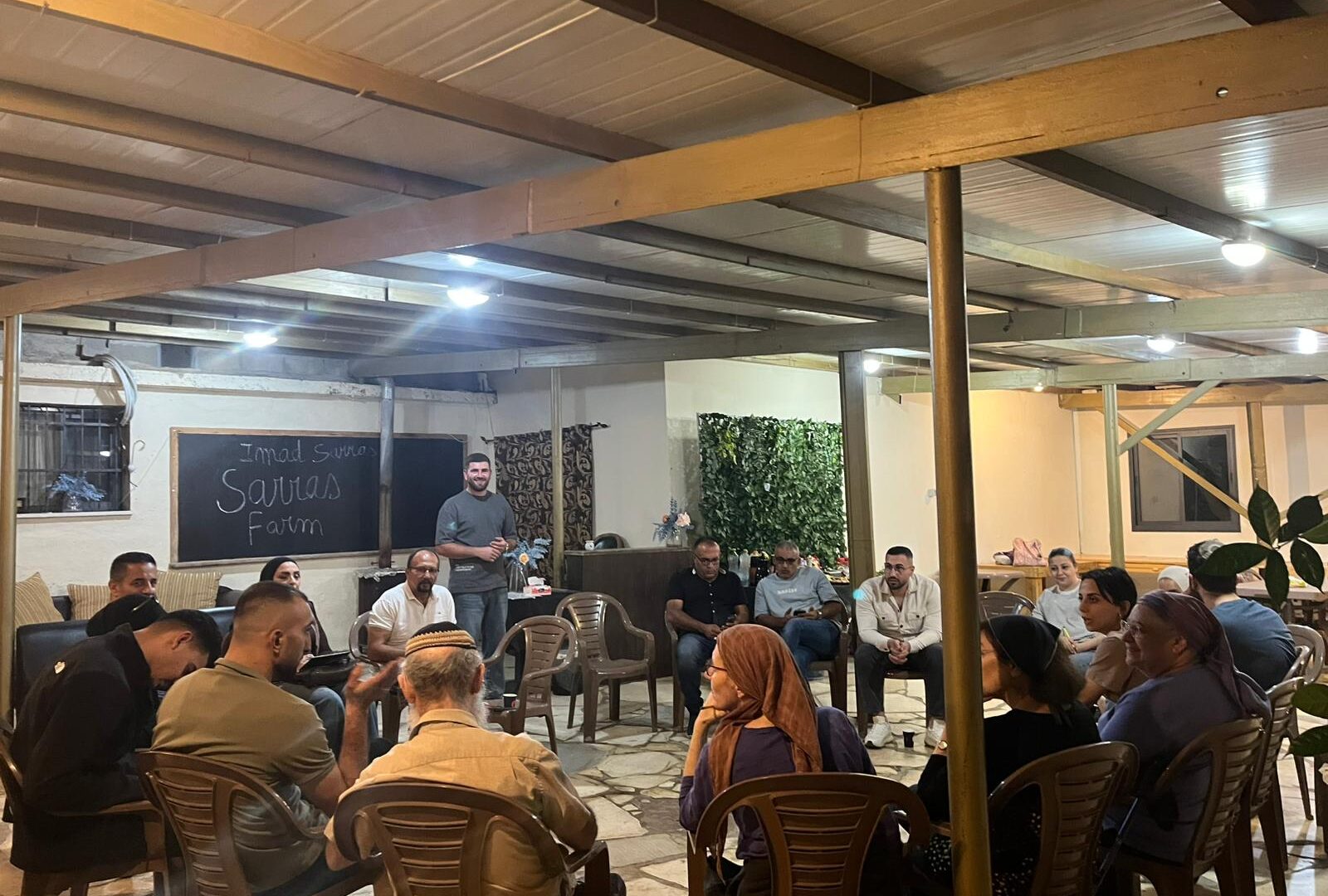
The Hebrew and Arabic courses took place online, while the language exchange was held at Roots’ activity center in Gush Etzion. The exchange was not designed as a formal dialogue group, but as practical, facilitated language practice rooted in everyday life. Participants practiced conversation around familiar topics such as family events, food, transportation, and leisure.
To support readiness and emotional safety, the joint sessions were paired with preparatory uninational meetings. Weekly 90-minute sessions were co-facilitated by Hebrew- and Arabic-speaking instructors from Lissan.
What the collaboration made possible
The project helped participants gain practical language skills and greater confidence in direct communication. Palestinian participants strengthened everyday Hebrew communication, while Israeli participants reported being able to hold basic conversations in Arabic.
When in-person exchange sessions took place, participants experienced the power of speaking with one another without relying fully on translation. The focus on ordinary, shared topics created space for curiosity, ease, and human connection — the kind of trust-building that can support deeper dialogue over time.
Why it matters
Café Shorashim showed that language learning can be a practical tool for trust. By helping people speak and listen more directly, the project created openings for more authentic relationships rooted in mutual understanding and shared humanity.
At a time of fragmentation and fear, this collaboration offered a concrete way to strengthen resilience through language, encounter, and community connection.